Best Cafés in Madrid for Reading, Writing and Hiding Out: The rooms worth retreating to when you want Madrid to go quiet without becoming dull
Writer Wills Duroy
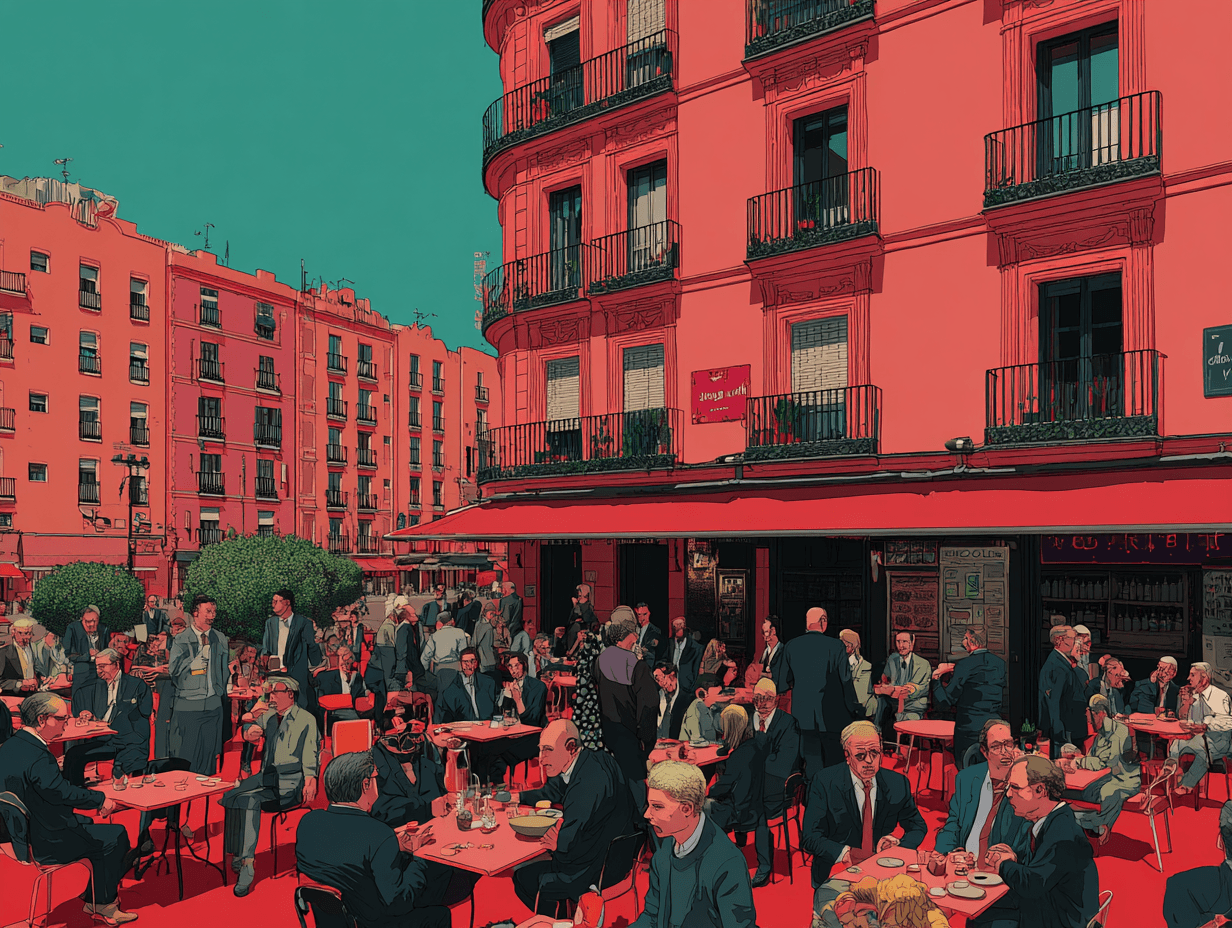
The best cafés in Madrid for reading, writing and hiding out are not just places with good coffee. They are places with the right atmosphere, the right light and the right kind of urban calm.
Madrid has one of Europe’s louder reputations. Even people who love the city often talk about it as though it were a place composed mostly of late dinners, packed bars, appetite, plazas and the kind of nocturnal ease that makes you feel faintly embarrassed for cities that have become too uptight to enjoy themselves. All of that is true. But it is only half the picture.
The other half is why Madrid survives repeat visits so well.
A city with no refuge in it eventually becomes tiring. You can admire its nightlife and still not wish to spend four days moving between restaurants and bars without ever having somewhere properly calm to sit. The best cafés in Madrid for reading, writing and hiding out matter because they provide exactly that: a way of disappearing into the city rather than escaping from it.
A proper hiding-out café is not simply “good for laptops,” whatever that miserable phrase now means. It is a room with emotional usefulness. Somewhere you can arrive a little fried from the night before, or vaguely overstimulated by a morning of walking, and find yourself restored by light, table space, decent coffee and the sense that no one is trying too hard to monetise your nervous system.
That is what this guide is about.
What makes a café good for reading and writing?
Not every beautiful café is actually useful. Not every specialty coffee room deserves your time. The best places for reading, writing and a little strategic disappearance usually have a few things in common.
They let you stay without making you feel guilty. They have some air in them, literal or emotional. They have the right kind of background movement: enough life that you do not feel stranded in silence, but not so much chaos that the room starts eating your thoughts. They are also usually located in parts of the city where a café stop can connect naturally to the rest of the day.
That last point is where Madrid becomes especially good. Official tourism still frames districts such as Malasaña and Barrio de las Letras not just as sightseeing zones but as places with cultural, social and nightlife identity. That means a great café in those areas is rarely just a café. It is part of a wider city route: breakfast, then coffee, then a bookshop, then a walk, then wine later, perhaps.
The city does not punish that sort of day. It rewards it.
Toma Café: for people who want the café to actually function
Toma Café has become one of those names that can suffer slightly from being too often recommended, but that should not distract from the fact that it remains genuinely useful. And usefulness, in a city guide, is one of the highest compliments available.
The appeal of Toma is not only that the coffee is taken seriously. It is that the room understands what people actually need from it. You can sit there and get your bearings. You can write a page, read a chapter, answer a few things, or simply reset without feeling as though you are taking up space meant for some more aesthetically acceptable customer.
There is a practical dignity to places like that. They are not trying to seduce you with concept alone. They are simply good urban rooms.
HanSo Café: the cleaner modern answer
HanSo is a different kind of useful. It has the more contemporary specialty-coffee profile: sharper lines, more streamlined energy, a little less literary romance and a little more clean-breathing city functionality. That can be exactly right on certain mornings.
Sometimes you do not want the café to become a whole mood. Sometimes you just want somewhere well run, good at coffee, calm enough to think in and straightforward enough not to hijack your day. HanSo is very good in that register.
It suits people who want their retreat to feel light and organised rather than plush or atmospheric. Not every hiding place has to be a cocoon. Some should simply help you reassemble yourself.
Misión Café: for the softer, slower half-day
Misión Café is perhaps the strongest answer when what you want is not just caffeine but tempo. It has more softness to it than some sharper coffee spots. The room invites a slightly longer stay. The experience feels less like a transaction and more like a discreet withdrawal from the pace of the city outside.
That makes it especially good for solo travellers, for writers who like to pretend they are working harder than they are, for people on their second coffee rather than their first, and for anyone who likes a café to feel like part of the day’s architecture rather than merely an errand stop.
There is a certain kind of Madrid afternoon for which Misión feels almost perfectly calibrated: a little tired from walking, a little sun-warmed, not yet ready for wine, grateful for a table and an hour that does not need to prove anything.
Federal Café: when space itself is the luxury
Federal’s greatest asset is not mystique. It is room.
That sounds banal until you spend enough time in European cities trying to read in cafés that clearly wish you would leave after twelve minutes. Space changes the emotional quality of a stop. It lets the body unclench. It makes breakfast bleed plausibly into a second coffee. It allows for the kind of travelling hour where nothing very dramatic happens and yet the whole day improves.
Federal is therefore less romantic than some places and more useful than many. It is particularly good if you are travelling with another person but want a slightly less compressed experience, or if your version of “hiding out” is simply to sit somewhere bright and good for longer than the city’s average tempo expects.
Which parts of Madrid suit this kind of café day best?
Malasaña is one of the clearest answers because it already supports a looser, more café-and-side-street kind of day. The district’s reputation for nightlife sometimes overshadows how good it can be for mornings and afternoons too. But that is exactly the point: a neighbourhood built for life at multiple speeds tends to produce better refuge rooms.
Barrio de las Letras is the more literary answer, and that remains one of the strongest city-day formulas in Madrid. Coffee, books, walking, a bit of cultural drift, perhaps a glass later. Official tourism still leans on the district’s literary identity, and while that can sound obvious, it is not wrong. It is very easy to have the kind of day here that makes you feel briefly as though you are not travelling badly.
Chamberí is often the better choice if you want the whole day to feel slightly more residential and less narratively packaged. The cafés here and around its wider orbit can be very good for people who like cities when they are not performing quite so hard.
How to use these cafés properly
The worst way to use this guide is as a hit list. Do not march from coffee stop to coffee stop, evaluating each like a judge in some private bean olympics. Pick one that suits the shape of your day.
If you want a productive or reflective morning, Toma or HanSo may make more sense. If you want the afternoon to soften a little, Misión is hard to beat. If you want room, light and a more generous stop, Federal is a very sensible answer.
Then let that stop connect to something else. A breakfast nearby. A walk. A bookshop. A slower district route. This guide sits most naturally alongside best breakfast spots in Madrid right now and best bookshops in Madrid for exactly that reason.
The real value of a café in Madrid
A hiding-out café is not only there to give you better coffee. It is there to save the texture of the trip.
That may sound overly dramatic, but anyone who has spent too long in an over-programmed city weekend knows the feeling: too many places, too much movement, not enough private time in public. The right café interrupts that. It gives you one stretch of the day where the city becomes absorbable again.
Madrid, for all its reputation as a city of nights, is quietly excellent at that kind of recovery.
And that is one of the reasons people keep coming back.
Wills Duroy writes for LocoWeekend. For more, subscribe.