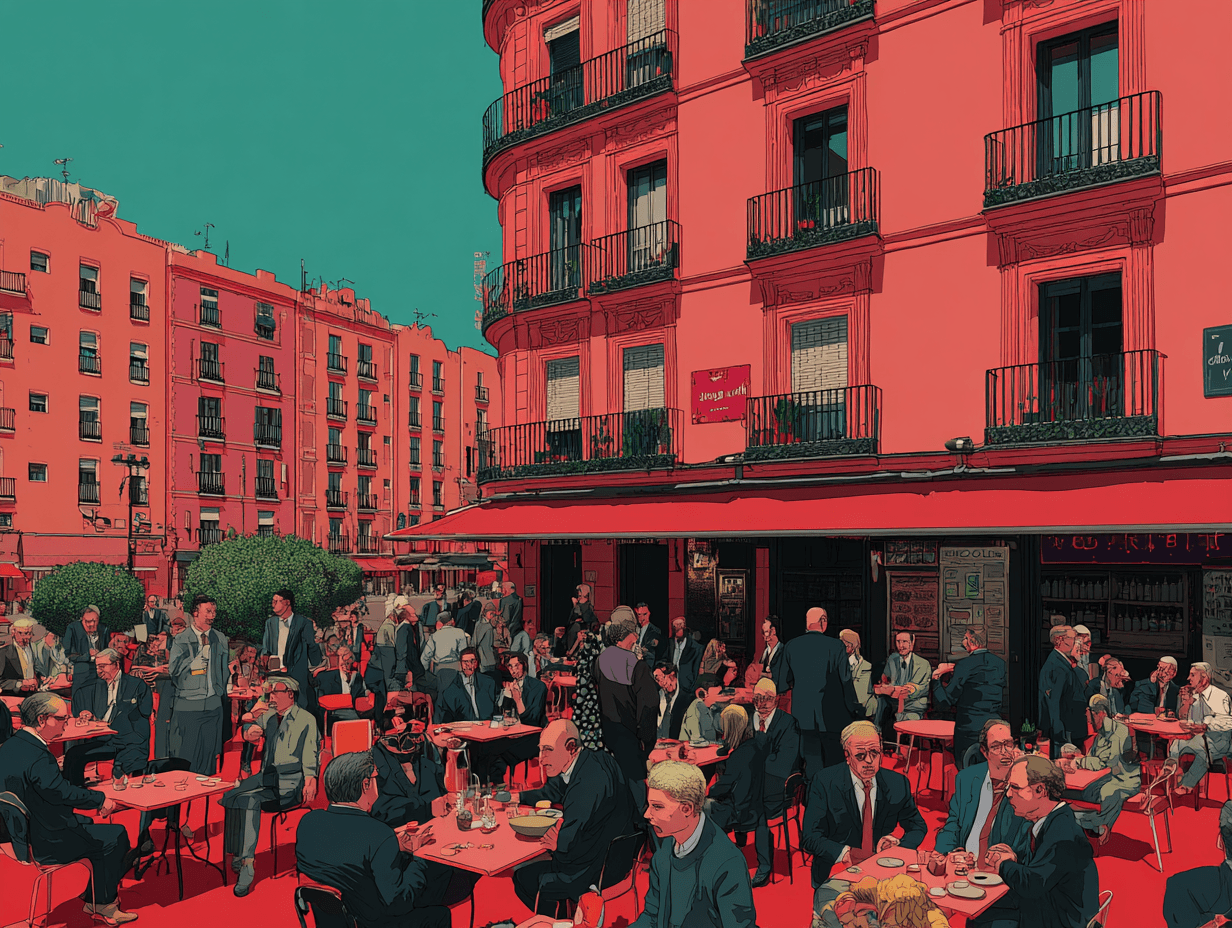
Too Good for Tourists: The restaurants that locals guard with their lives
Writer Patrick Duroy
Ask a Madrileño where to eat and they'll send you to Sol. Ask their grandmother and you'll end up in a tiled room with no menu and the best tortilla of your life.
Every city has two restaurant guides. The first is the one you find on Google: the TripAdvisor top ten, the Eater heatmap, the place your colleague went last summer and won't stop talking about. The second guide doesn't exist in writing. It lives in the heads of grandmothers, taxi drivers, and the guy who runs the newsstand on the corner.
In Madrid, the gap between these two guides is wider than anywhere else I've eaten.
The tourist trap circuit
You know the route. You land at Barajas, check into your hotel near Sol, and within twenty minutes you're sitting in a restaurant with laminated menus in four languages, paying fourteen euros for patatas bravas that taste like they were microwaved by someone who's never eaten a potato.
This is not Madrid's fault. This is your fault. You Googled "best restaurants Madrid" and clicked the first result. The algorithm sent you to the same place it sends everyone else. The restaurant knows this. They don't need to be good. They need to be findable.
The grandmother network
The real restaurants — the ones that make you close your eyes and reconsider your life choices — are never on the first page of anything. They're in neighbourhoods you haven't heard of, on streets that don't look like they contain restaurants.
You find them the same way you find anything worth finding: you ask someone who lives there.
Note"My grandmother has been eating at the same restaurant every Sunday for forty years. It doesn't have a website. The owner's son is the waiter. The menu is whatever they bought at the market that morning."
What makes them different
The food is not trying to be anything. It's not "elevated" or "reimagined" or "deconstructed." It's a tortilla made with six eggs and half a kilo of potatoes, cooked slowly in olive oil that costs more than the meal. It's gambas al ajillo served in the same clay dish they've used since 1974.
The wine list is three wines. Red, white, and the one the owner's brother makes in La Mancha.
I'm not going to list the restaurants here. That would defeat the purpose. But I will tell you this: get on the Metro, go three stops past where you're comfortable, walk until you find a place with no English on the menu, sit down, and point at what the person next to you is eating.
You'll be fine.
Patrick Duroy writes for LocoWeekend. For more, subscribe.