Why Lisbon Still Has Better Weekend Energy Than Bigger Cities: Scale, light, looseness and the art of not over-programming a good time
Writer Patrick Duroy
Lisbon still does weekends better than cities with more money, more openings and more noise. The reason is not hype. It is rhythm.
Why Lisbon Still Has Better Weekend Energy Than Bigger Cities
Some cities are better on paper than they are in the body. They have more openings, more hotel launches, more “scenes”, more capital, more polished recommendations, more reasons to believe that a weekend there should be brilliant. Then you arrive and somehow the thing feels over-managed. The meals are booked too far ahead. The cool areas have already been flattened into districts of self-awareness. Every recommendation comes pre-loaded with content. The city performs itself before you have had a chance to feel it.
Lisbon still escapes that trap more often than most.
That does not mean Lisbon is untouched, undiscovered or immune to fashion. Obviously not. The city has been written, sold, photographed and optimised to death over the past decade. Rooftops multiplied. boutique hotels learned how to speak in soft beige. brunch became a semi-official religion. half the world now knows where to point a camera in Alfama. But the reason Lisbon still has better weekend energy than bigger cities is that, underneath the visibility, the place retains a rhythm that richer and more over-programmed cities have already spent.
Weekend energy is not the same as a long list of things to do. It is not merely density, nor nightlife, nor sunshine, nor affordability. It is the relationship between pace and possibility. It is whether the city keeps offering you believable next moves without making you feel trapped inside someone else’s itinerary. It is whether one good breakfast can slide into a proper walk, whether a walk can become a bookshop stop, whether a glass turns into dinner, whether dinner can become a rooftop or a final bar without the whole thing collapsing into admin.
Lisbon is very, very good at that.
That is the real reason the city keeps outperforming places with more money and bigger reputations. A Lisbon weekend still feels assembled rather than imposed. You can have structure without stiffness. You can improvise without wasting the day. You can do cultured, cheap, elegant, a bit messy, a bit romantic, a bit accidental, and often all of it inside the same twelve hours.
That should already be visible across the city cluster we are building here. Best Wine Bars in Lisbon Right Now works because the bars live inside walkable nights rather than sealed-off “destinations”. Best Rooftop Bars in Lisbon works because the terraces plug naturally into neighbourhood movement. Best Breakfast Spots in Lisbon works because the morning is not filler in this city. The Coolest Streets in Lisbon works because Lisbon still reveals itself block by block.
Bigger cities increasingly struggle with that continuity.
Scale without deadness
One of Lisbon’s great strengths is that it is substantial without becoming exhausting. Cities like London, Paris and Berlin are full of possibilities, but possibility at that scale starts to come with logistical taxation. You do not just choose where to go. You choose what transport burden, reservation burden, distance burden and timing burden you are willing to absorb.
Lisbon is different. It is not small in the simplistic sense, but it is small enough for movement to stay pleasurable. That matters far more to weekend quality than many guides admit. If a city gives you five great options but makes the transitions between them miserable, the day becomes segmented. Lisbon still lets a day flow.
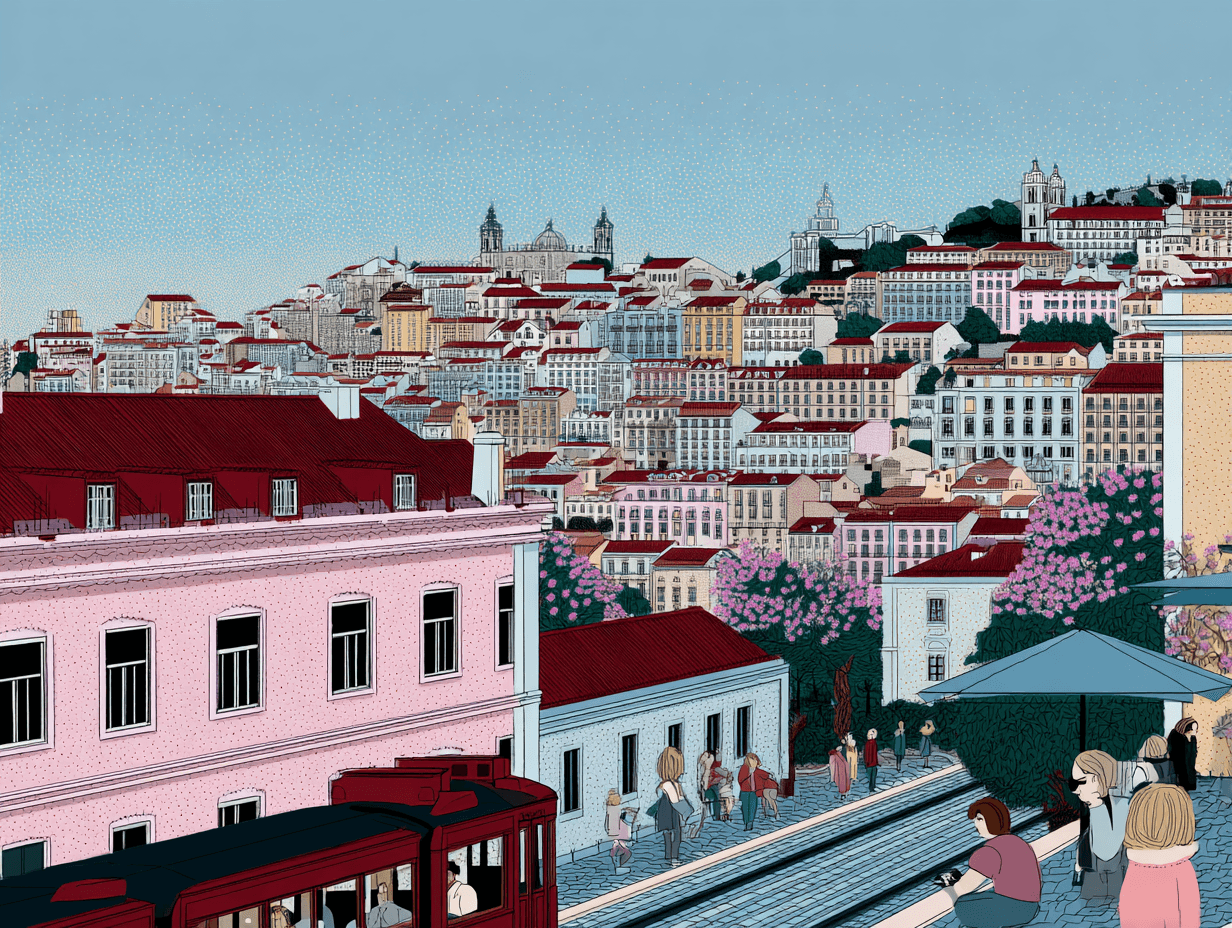
You can start in Santos, drift through São Bento, cut up to Príncipe Real, drop toward Chiado, and end up around Cais do Sodré without feeling like you have been doing battle with the city. The hills are real, yes, but the trade-off is that those slopes create revelation. A turn gives you a new view. A staircase rewrites the route. Even inconvenience becomes scenic.
The result is that weekends here feel continuous. They do not break into sealed compartments the way bigger cities often do. Continuity is underrated. It is one of the major ingredients of pleasure.
Lisbon still rewards drift
The best weekends are rarely the most overbooked ones. They are the ones where the city keeps returning value for curiosity. Lisbon still does that.
This is where bigger cities have quietly lost something. In places with heavier commercialisation, drift has become less productive. Wander too far off-plan and you end up in zones built mainly for rent extraction, dead retail or algorithmic sameness. The spontaneity tax has risen. In Lisbon, wandering still tends to produce things: a kiosk, a miradouro, a tiled façade worth slowing down for, a bar that makes sense in the exact hour you find it, a better route than the one you meant to take.
That quality can sound sentimental if described lazily, but it is actually structural. Lisbon’s street pattern, neighbourhood transitions and social density all help. So does the fact that the city still has a slightly uneven surface. It is not frictionless. Good cities should not be frictionless. They should just reward the friction.
Light is not a trivial advantage
People often underrate how much light shapes a city’s weekend energy. Lisbon gets this for free and then compounds it through topography, colour and water. The city’s light does not just flatter photographs. It changes behaviour. It extends the emotional range of a day. It makes breakfast feel more open, afternoons less wasted, early evening drinks more necessary, and late sunsets more socially useful.
That sounds airy, but it is not. Weekend energy depends on whether a city knows what to do with time. Lisbon does. A Saturday afternoon here often feels available in a way that it does not in greyer, flatter, more compressed cities. The day does not collapse as quickly. You keep believing you can still fit one more good thing in, and often you can.
Food and drink are integrated, not siloed
In too many cities, good eating and drinking have become separate economies. There are restaurant nights and bar nights, brunch zones and culture zones, hotel zones and local zones. You can do them all, but they do not always speak to one another naturally.
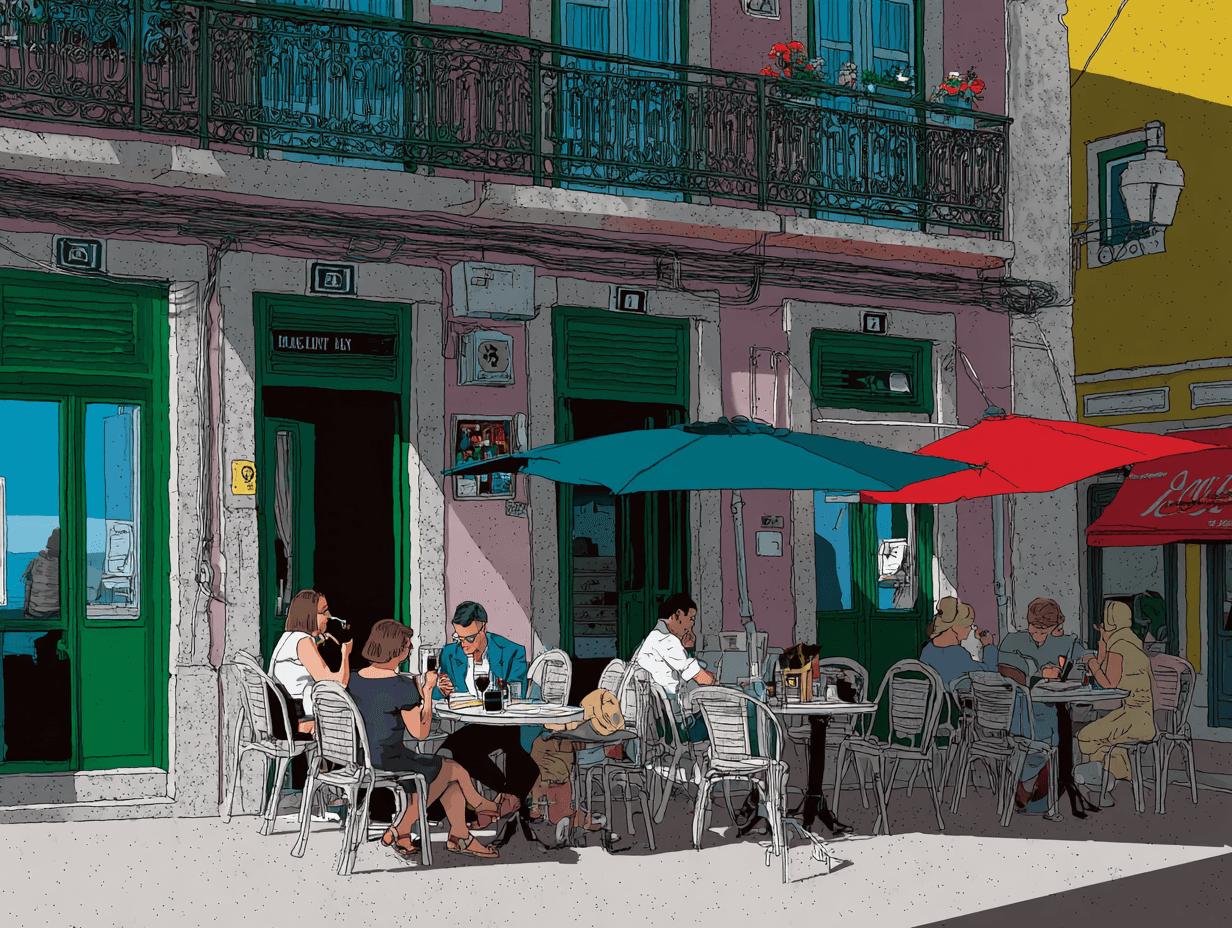
Lisbon is stronger here. Wine bars are often close to dinner. Breakfast can lead straight into shopping or architecture or a river walk. A rooftop can be either a destination or a hinge. A kiosk can save an afternoon without derailing it. This integration is one of the city’s biggest advantages and one of the main reasons it still feels better at weekend scale than places with more aggressive hospitality industries.
You can see that in the route logic of the pieces already on this site. Best Wine Bars in Lisbon Right Now sits naturally beside Best Rooftop Bars in Lisbon because those are not different worlds here. Best Breakfast Spots in Lisbon does not need to be filed away as soft content because in Lisbon the morning really does matter to the rest of the day. The Coolest Streets in Lisbon is not just a walking piece; it is a map of how the city hands you your next move.
That coherence is hard to fake. Cities either have it or they do not.
Lisbon still has room for under-planning
This might be the real answer.
The best city weekends often depend on not knowing exactly what happens at 7:40pm. Bigger cities are increasingly bad at tolerating that. They have become reservation-heavy, scarcity-heavy and status-heavy. You need a strategy before you have even left the hotel. The result is not always better. Often it is just tighter.
Lisbon still leaves room around the edges. Not everywhere, not always, and not forever, but enough. Enough that you can land with a few strong anchors and let the rest happen. That is liberating. It creates better weekends because it creates better attention. You are not spending the whole day protecting a spreadsheet.
There is also a psychological consequence to that looseness: Lisbon feels more forgiving. If lunch overruns, the day survives. If a rooftop is full, the next bar usually makes sense. If you take the wrong hill, the city often pays you back with a better view. If dinner becomes drinks, or drinks become dinner, nothing breaks.
That flexibility is a form of luxury more meaningful than many luxury products.
Bigger cities increasingly over-explain themselves
One of the reasons Lisbon still wins is that it has not completely lost mystery.
Bigger cities with heavier content economies increasingly arrive pre-narrated. Every “hidden gem” has already been put in circulation. Every area has been translated into simplified keywords. Every recommendation has become a genre. This does not just affect tourists; it affects the atmosphere of the city itself. Places start behaving like they know they are being watched.
Lisbon has some of that now, of course. But it has not fully tipped. There are still parts of the city where recommendation culture has not fully replaced discovery culture. There are still mornings that feel like mornings rather than a media format. There are still streets where life appears to be happening without waiting for approval.
That is a big reason The Coolest Streets in Lisbon exists as a useful guide rather than pure content theatre. The city still has streets that behave like streets. Not just brands.
The city’s elegance is still loose
Lisbon has another advantage that richer capitals struggle with: it can be beautiful without becoming oppressive. Some beautiful cities bully you with their own finishedness. Lisbon is too irregular for that. It has elegance, but it also has wear. It has facades, but it also has cracks. It has grace without over-curation.
That combination matters for weekends. It gives the city a softness. You can dress up here without becoming ridiculous. You can do casual without feeling underdressed. You can eat well without formalising the night. You can move between price levels, moods and neighbourhoods without the city punishing you for inconsistency.
That flexibility is one of the clearest markers of strong weekend energy.
A great Lisbon weekend still feels human-sized
This is probably the cleanest way to put it: Lisbon still feels human-sized at the point of use.
Not in terms of literal geography. In terms of emotional handling. The city rarely asks you to become hyper-efficient in order to enjoy it. It allows slowness without wasting your time. It allows appetite without forcing consumption. It allows movement without turning the day into transit.
The best wine bars in Lisbon still feel part of the city rather than escapes from it. The best breakfast spots in Lisbon still feel like real mornings rather than staging posts. The best rooftop bars in Lisbon still let the city stay visible beneath the view. The coolest streets in Lisbon still function as lived urban texture rather than dead backdrops.
All of those things add up.
So what should you actually do with this?
Do less than you think.
Pick one strong breakfast, one street sequence, one drink anchor, one dinner area and one late option. Leave gaps. Lisbon rewards gaps. It fills them better than most places.
A very good version of the city might look like this:
- breakfast in Santos or central Lisbon
- a slow walk through São Bento and Príncipe Real
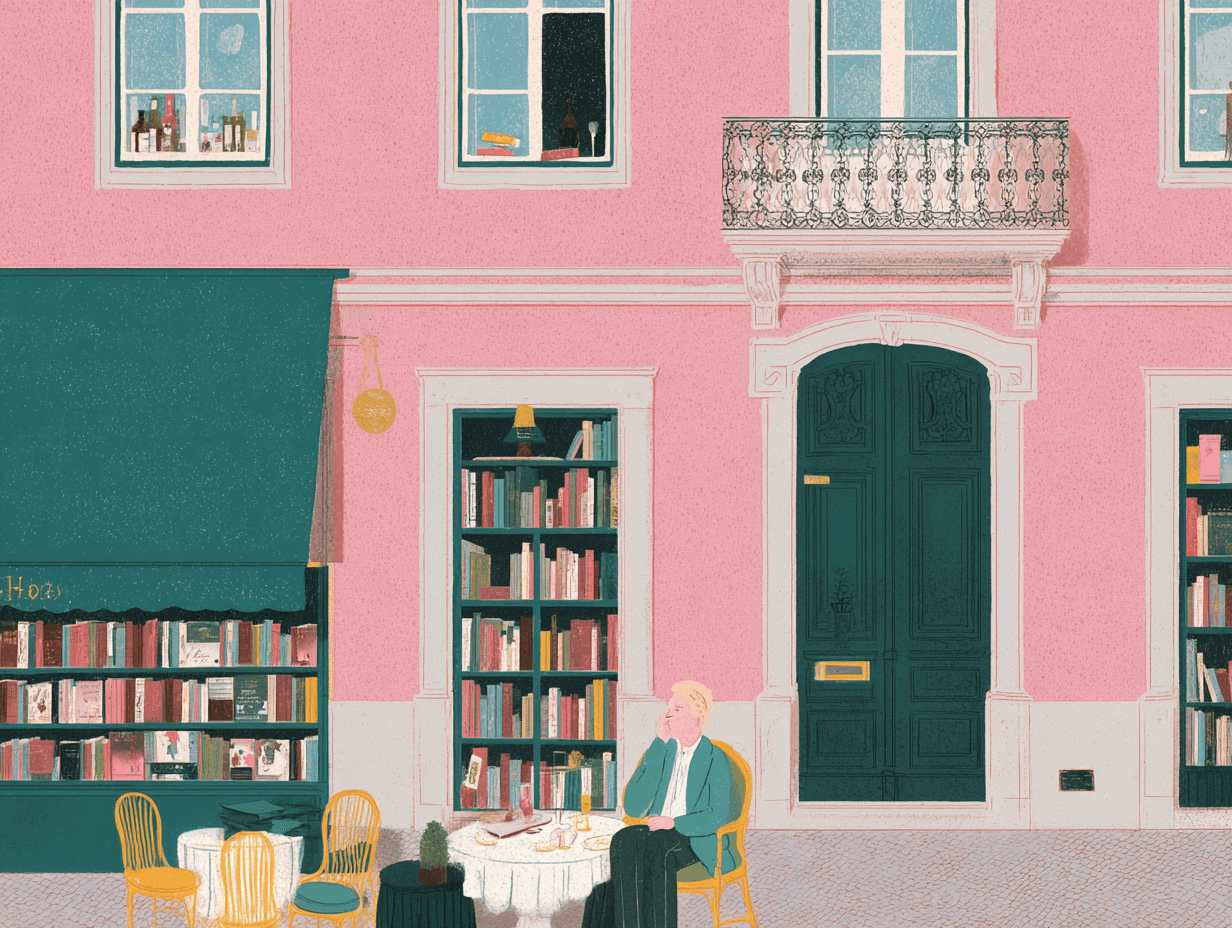
- a bookshop or two in Chiado
- a later lunch or long coffee
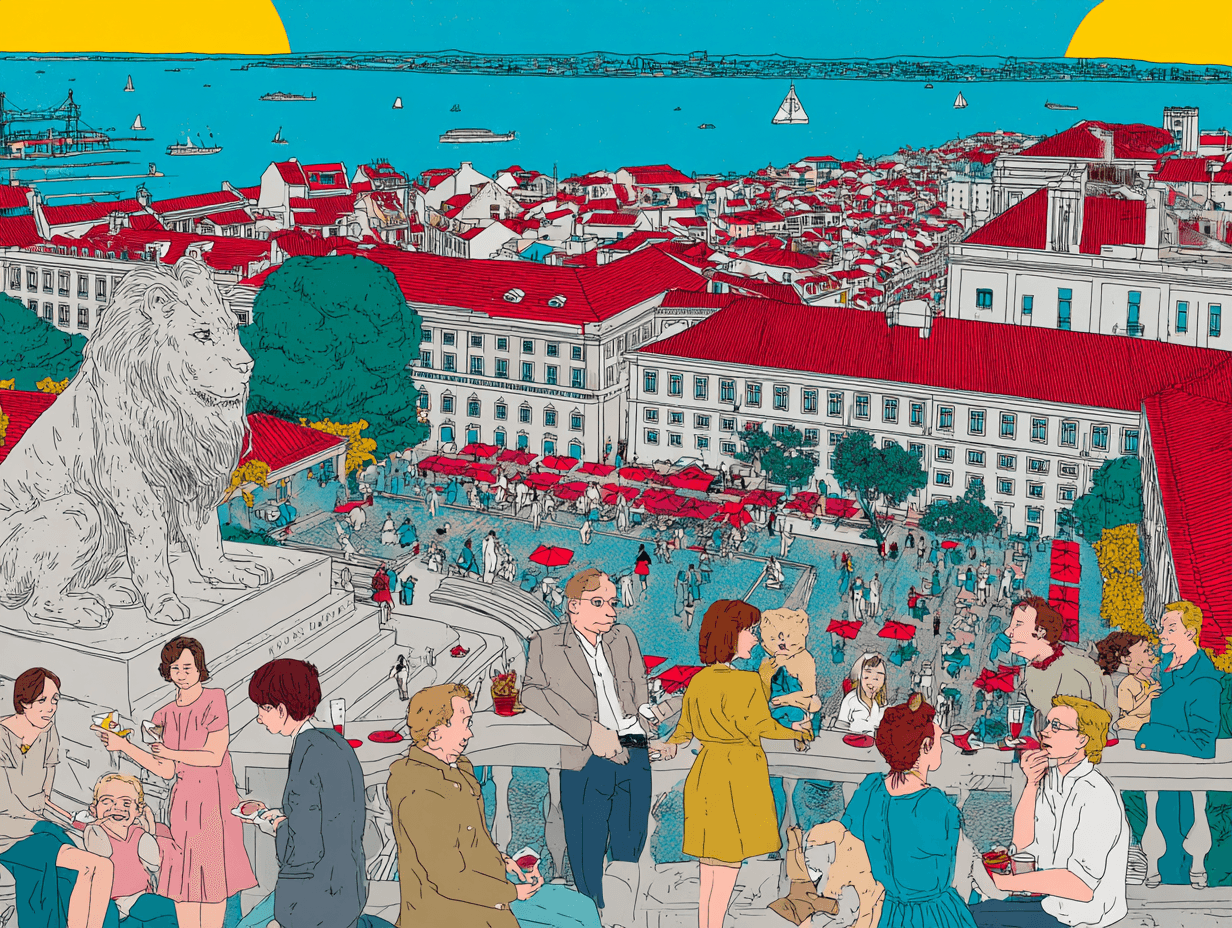
- sunset on a rooftop
- wine bar, then dinner, then whatever still feels right
That is not an especially radical itinerary. That is the point. Lisbon does not need heroic scheduling. It needs the right tempo.
Final word
Why does Lisbon still have better weekend energy than bigger cities?
Because it has not yet traded all of its looseness for efficiency. Because the city still lets days connect. Because one good decision often creates the next one naturally. Because scale, light, hills, bars, breakfasts, kiosks, viewpoints and streets still work together rather than competing for your attention.
And because a weekend should feel lived, not administered.
Patrick Duroy writes for LocoWeekend. For more, subscribe.