Your Clothes Are Plastic. What Does That Actually Mean?
Polyester, nylon and cotton behave differently, but fibre labels cannot rank every garment. A practical guide to materials, recycling and better purchases.
Global / Style
The word plastic tells you something real about a polyester shirt. It tells you much less about its fit, useful life or whether buying a replacement would help.
Polyester and nylon are synthetic polymer fibres: materials that belong to the broad family we commonly call plastics. Cotton is a natural plant fibre. That difference matters for production, use and disposal, but it does not establish that every cotton garment is better than every synthetic one.
A fibre label describes an important ingredient in a piece of clothing. It does not describe the entire garment. Construction, fit, finishing, care and the amount you wear it can all change the practical value of what you bought.
The most useful response to discovering plastic in your wardrobe is therefore curiosity. What is this material doing here? Does it serve the garment's purpose? And what evidence supports the claims attached to it?
First, decode the names on the label
Polyester, nylon, acrylic and elastane are different materials, not interchangeable names for one substance. Their differences are precisely why clothing manufacturers use them in different combinations.
The US Federal Trade Commission's generic fibre definitions identify polyester as a synthetic polymer fibre, nylon as a synthetic polyamide and spandex as a fibre based predominantly on segmented polyurethane. The same reference distinguishes rayon and lyocell as regenerated-cellulose fibres. These definitions help clarify chemistry; they do not award a quality score to the finished clothes.
That last distinction matters. A manufactured fibre is not necessarily the same kind of material as conventional polyester. Rayon and lyocell involve industrial processing of cellulose. Putting every factory-made fibre into a single “plastic” category obscures useful differences.
You do not need to memorise chemical definitions to shop well. Start by recognising that the composition label is a list of materials with different properties. Then examine what the maker has done with them.
Why polyester became so common
Synthetic fibres offer manufacturers a versatile set of options. The European Environment Agency's report on plastics in textiles describes their widespread use and considers the environmental pressures associated with production, use and disposal.
The scale is substantial. Textile Exchange's Materials Market Report 2024, covering 2023 production, reports that polyester represented 57% of the global fibre market. That is a share of fibre production across applications, not a claim that 57% of the clothes in your wardrobe are polyester.
The statistic establishes prevalence. It cannot explain the quality of a particular shirt. A material can be used in both a carefully engineered garment and a cheaply made one. Its popularity may make the low-quality examples especially visible without making them representative of everything possible with it.
This is one reason the conversation becomes confused. People often compare a synthetic item they disliked with a natural-fibre item they loved, then attribute the entire difference to composition. That personal experience matters, but it is not a controlled comparison of fibres.
A fibre is not a fabric, and a fabric is not a garment
Think of clothing in three stages. Fibres become yarns and fabrics; fabrics become garments. Each stage introduces decisions.
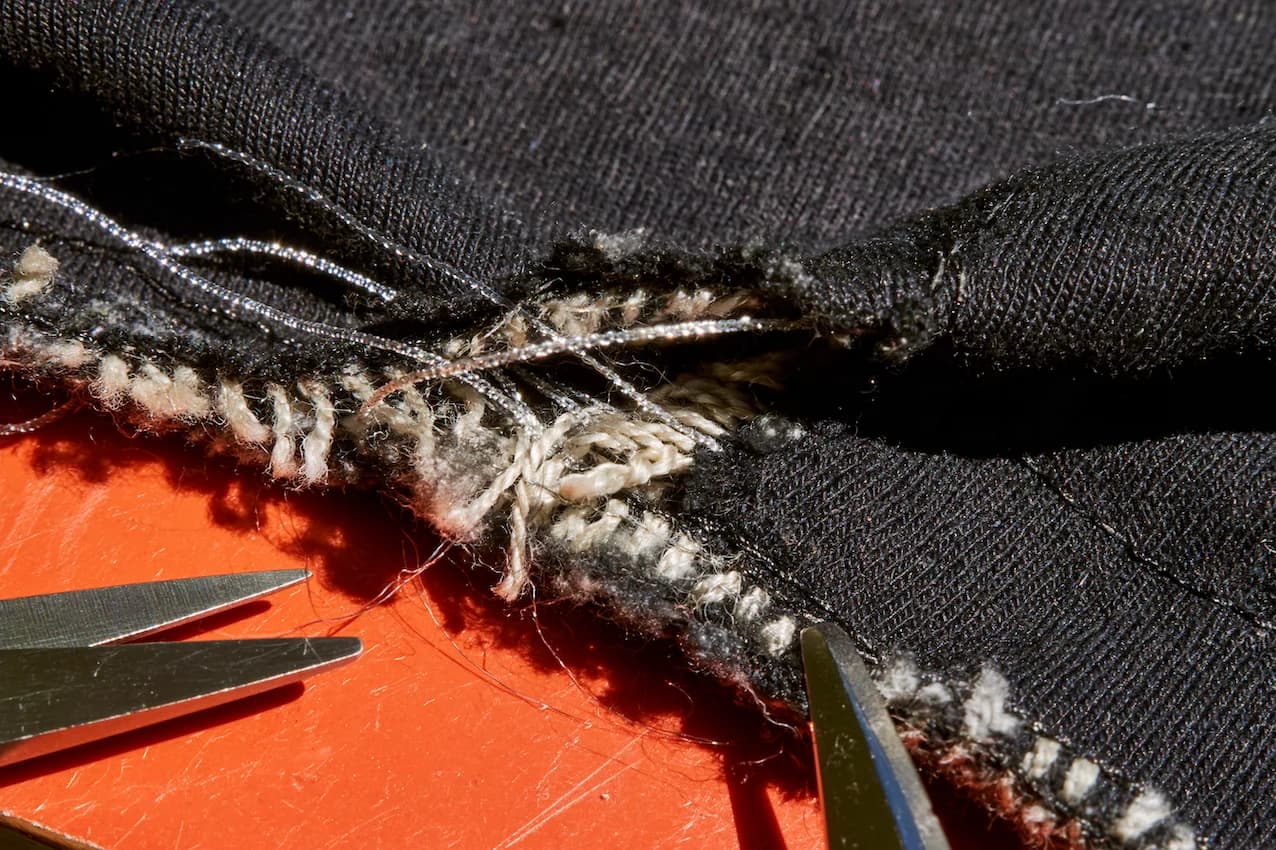
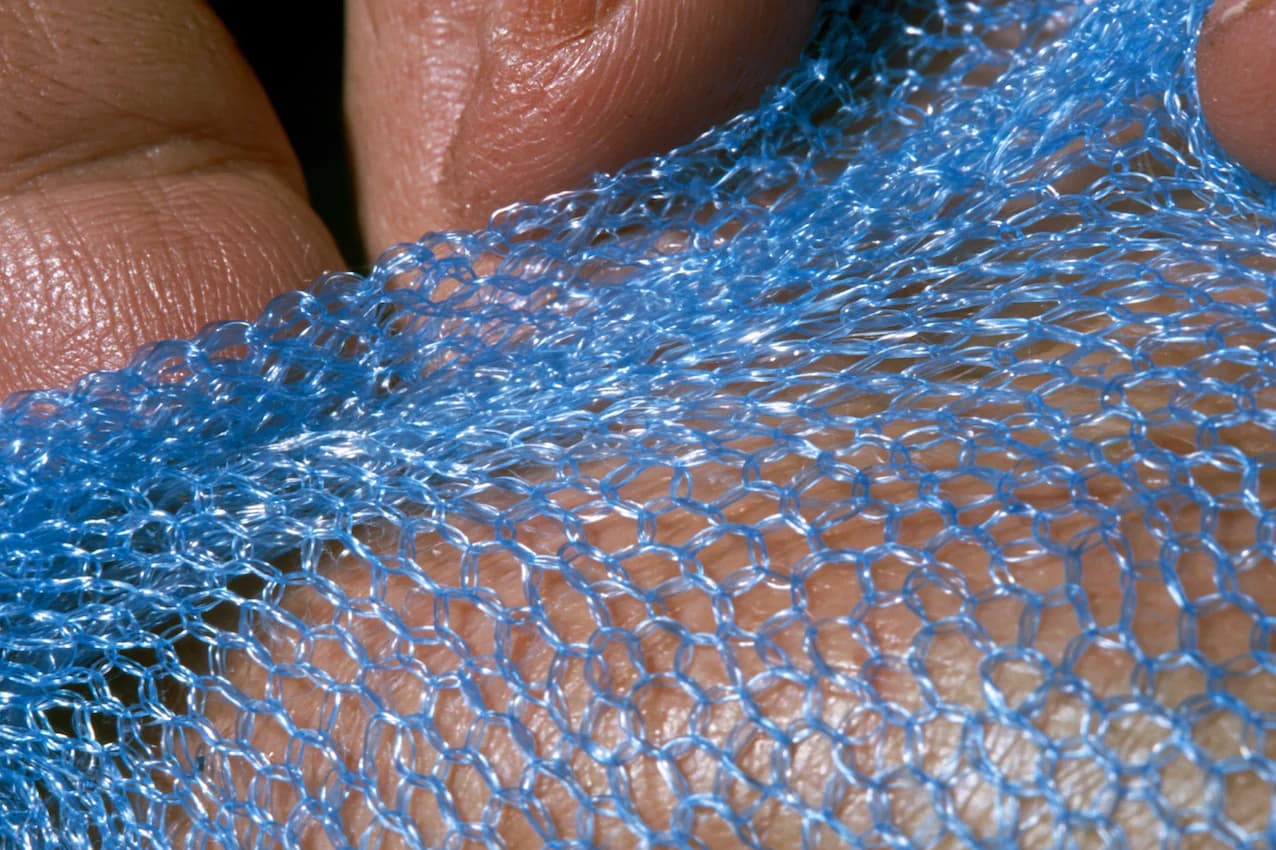
Two items with the same composition can have visibly different weight, texture, density and construction. One may have a loose, airy structure, another a dense surface. Their seams, lining and cut can differ again. You can often observe those differences directly without a laboratory.
That is why a label reading “100% cotton” cannot promise a perfect summer shirt, and a polyester percentage cannot tell you whether a jacket fits its intended use. The material description is useful evidence, but only part of it.
In a shop, inspect the actual object. Hold it up to the light, look at the seams, move your arms and sit down if the garment permits a fitting. Ask whether the fabric behaves as you want it to. These observations answer questions that the fibre list leaves open.
Our discussion of the gorpcore plateau sits alongside this problem: technical appearance and actual purpose can drift apart. A garment should earn its place through what it does for you, rather than through a borrowed vocabulary of performance.
Is cotton better for the environment?
There is no responsible universal answer without defining “better” and the comparison being made.
The EEA report describes different pressures associated with synthetic and natural fibres. Fossil resource use, energy, agricultural inputs and water are not the same measurement. Improving one does not automatically establish an improvement in every other category.
An environmental comparison also needs a boundary. Does it cover fibre production alone, the finished garment, washing and drying, or disposal? Does it compare equal weights of material or clothing that provides the same service for the same length of time?
Imagine two hypothetical shirts. One has a lower production impact under a chosen measure but is worn five times. The other has a higher production impact and is worn a hundred times. That information changes the question, but it still does not supply enough data to calculate the answer. You would need the actual impacts, care assumptions and reasons for replacement.
This is the central problem with a one-line ranking. It compresses several environmental questions and many product differences into one winner. A credible product claim should say what was measured and what it was compared with.
Recycled polyester answers one question, not all of them
Recycled content tells you something about the source of material. It does not, by itself, tell you where the finished item will go next.
Textile Exchange's 2024 report notes that recycled polyester has relied mainly on plastic bottles as feedstock and that less than 1% of the global fibre market came from recycled textiles in 2023. Those dated findings are a reason to ask whether a claim describes bottle-to-fibre production or actual textile-to-textile recycling.
Both can involve recovered material. They are nevertheless different material journeys. A bottle becoming a fleece does not demonstrate that the fleece can become another fleece through an available collection and recycling system.
Ask three separate questions: what percentage is recycled, what was the feedstock, and what happens to this product after use? A hangtag may answer the first while saying little about the other two.
This is explored in more detail in why clothes are so hard to recycle. The practical obstacles begin with the garment that actually reaches the sorting system, including its mixture of materials and components.
What a blend percentage can hide
A blend can be a deliberate functional choice. It can also make a label harder to interpret if the marketing highlights only the most appealing ingredient.
Consider an illustrative label reading 60% cotton, 35% polyester and 5% elastane. Calling the garment “cotton-rich” describes its largest component. It does not mean the item is entirely cotton, entirely plant-derived or straightforward to process as a single material after use.
Likewise, a product marketed around recycled polyester may contain other virgin materials. The meaningful figure is the proportion of the relevant component or the whole product, whichever the claim actually specifies.
Read the wording carefully. “Contains recycled material” is a much weaker statement than a clear percentage and scope. Does the percentage refer to the shell, the lining or every part of the garment? An attractive headline can coexist with a much narrower technical claim.
This does not make blends inherently undesirable. It means their purpose and end-of-life route deserve the same attention as their headline ingredient.
Shedding is a question about the garment's whole life
The EEA identifies releases of synthetic fibres during different stages of textile production, use and disposal. Washing is part of the discussion, but it is not the only stage worth examining.
For shoppers, the important distinction is between evidence about a tested fabric and a broad claim about every item in a category. A single fibre percentage does not provide a measured shedding rate for the garment in your hands.
Be cautious about products advertised as a complete solution to microplastic pollution without a clear test method and scope. A laundry accessory may address a specific point in the process; that does not mean it prevents every release associated with manufacturing, wearing and disposal.
Nor does the existence of this problem establish that throwing out wearable clothes is the best response. Disposal creates another decision, and a replacement requires another product. Keep the different stages in view rather than treating a new purchase as an automatic environmental repair.
A wardrobe audit is more useful than a material purge
Start with the clothes you already own. Which do you wear repeatedly? Which remain untouched? For each neglected item, identify the reason as precisely as possible.
The problem might be an uncomfortable fabric, but it might also be an awkward cut, a colour that works with nothing else or care instructions you cannot realistically follow. Those are different purchasing mistakes and need different corrections.
A simple record can be more revealing than an idealised shopping list:
| Observation | Question for the next purchase |
|---|---|
| You avoid wearing an item | Is the issue material, fit, appearance or care? |
| A seam fails before the fabric | Can you inspect construction more closely? |
| An item needs inconvenient care | Will its routine fit your actual week? |
| A favourite gets frequent use | Which specific qualities should you seek again? |
| A garment is wearable but redundant | Do you need another item in that role? |
The point is to learn from evidence you already have. A material you consistently enjoy in one type of garment may be a sensible preference, even if another person prefers something different.
How to read a clothing claim without becoming a textile chemist
Separate identity claims from performance claims. “Polyester” identifies a fibre family. “Recycled” describes a source. “Durable” claims a result over time. “Breathable” claims a kind of performance. These statements require different forms of evidence.
Ask for specifics when the claim matters to your purchase. What was tested? Was it this fabric or a generic material? What conditions were used? Is there a repair service, a care guide or a clear explanation of the product's construction?
You can apply the same discipline to price. An expensive garment is not automatically better made, just as an expensive fragrance does not reveal its ingredient costs. Our guide to what a £150 perfume price buys examines that similar gap between a material story and a finished product's price.
Finally, keep the decision proportional. You do not need a complete lifecycle assessment to replace a worn-out pair of trousers. You do need enough information to avoid buying a product for a claim it does not substantiate.
So should you avoid polyester?
You can choose to reduce new synthetic purchases for reasons that matter to you. What the evidence does not support is using the word polyester as a complete verdict on every garment, or assuming every replacement labelled natural resolves every environmental concern.
A more useful standard is specific: a garment that serves a real purpose, feels right, is constructed well enough for your use and comes with claims you can understand. Read the fibre label, then keep looking.
Your clothes may contain plastic. The next question is what those clothes are actually doing in your life.
Sources checked 20 September 2026. Global fibre-market figures refer to 2023 production reported in Textile Exchange's 2024 publication.