The Gorpcore Plateau
Arc'teryx and Salomon conquered the city. Now what?
London / Culture
From Shoreditch to SoHo to Le Marais, technical outerwear became the urban uniform. But every aesthetic cycle peaks. The outdoor-luxury moment is flattening — and workwear is waiting.
The Gorpcore Plateau
Arc'teryx and Salomon conquered the city. Now what?
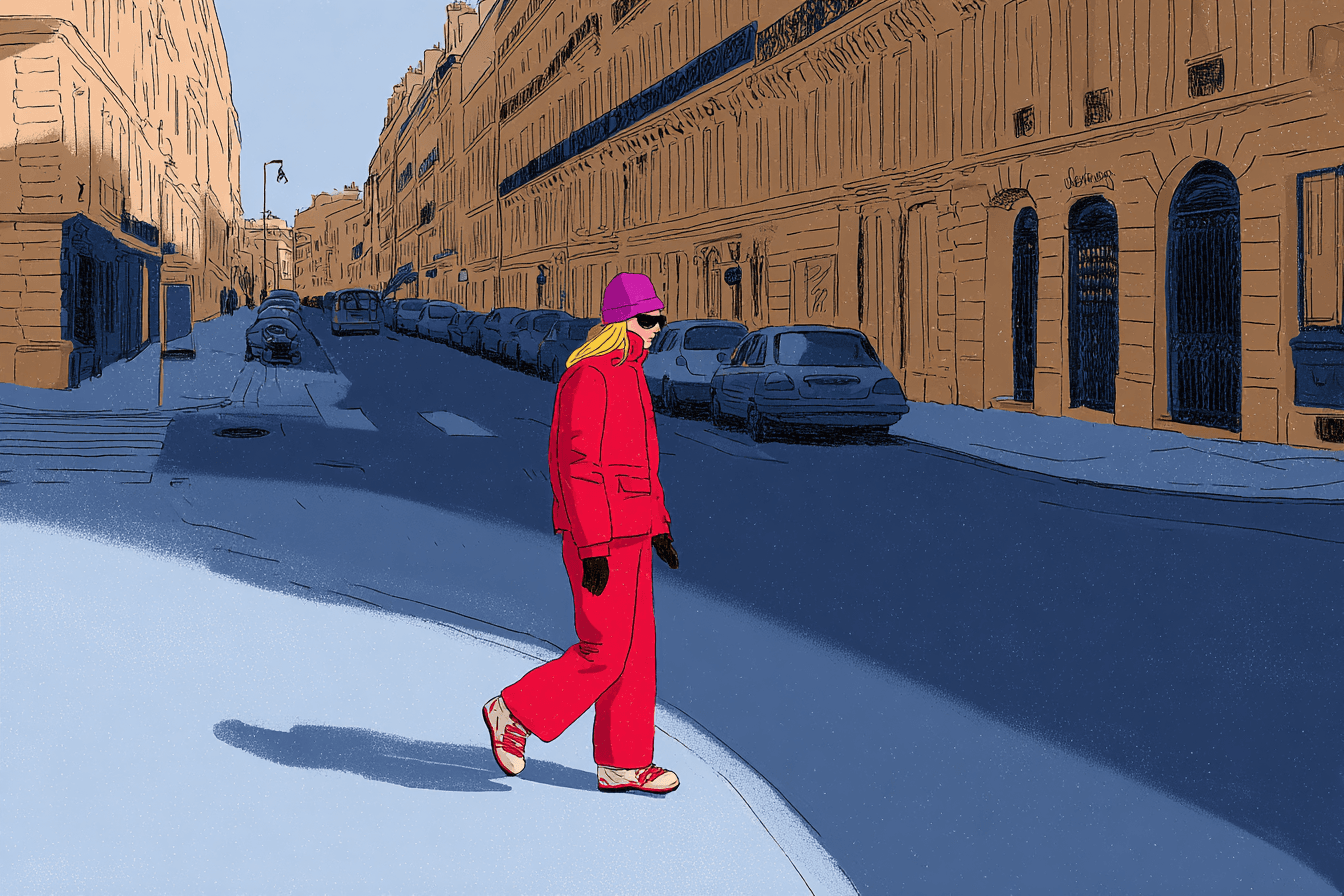
On a grey morning in Shoreditch, the pavements are full of laminated shells. Not metaphorically — literally. Arc’teryx hoods pulled tight against a drizzle that would barely justify an umbrella. Salomon trail runners pacing between cafés and studios as though a mountain ridge might suddenly rise behind Old Street roundabout. Across the Atlantic, SoHo mirrors the look: technical nylon, zipped pockets, drawcords, hydration-ready silhouettes deployed for a twelve-minute walk between meetings. In Paris, along the Canal Saint-Martin, the same palette repeats — slate, moss, graphite — interrupted only by the bright punctuation of a co-branded sneaker.
For half a decade, gorpcore — the aesthetic borrowing of serious outdoor gear for urban life — has been less a trend than a takeover. Arc’teryx, once a brand associated with alpine precision and ice-climbing credibility, has become shorthand for urban taste. Salomon, long a technical trail-running specialist, now occupies front rows and mood boards. Hiking became a style. Performance became posture.
But cycles flatten. They always do.
The question is not whether gorpcore succeeded. It did, commercially and culturally. The question is why it is plateauing — and what the plateau reveals about how fashion cycles operate once performancewear becomes luxury and luxury becomes uniform.
How outdoor gear became urban currency
To understand the plateau, you have to understand the ascent.
Gorpcore did not emerge from nowhere. It followed a decade in which streetwear moved from subculture to global industry. By the late 2010s, logos had saturated the market. The hype cycle — drops, queues, resale spikes — had peaked. When every brand was shouting, subtlety became scarce.
Then came the pandemic.
Lockdowns reshaped priorities. Comfort trumped spectacle. Function began to signal rationality. Suddenly, clothing that suggested preparedness, resilience, and practical capability felt emotionally correct. Hiking shoes replaced fashion sneakers. Nylon shells replaced fragile tailoring. Even those who never left the city wanted to look like they could.
Arc’teryx revenue surged under Amer Sports. Salomon collaborations multiplied — with MM6, Palace, Sandy Liang — translating alpine credibility into runway language. Lyst Index rankings reflected performance brands climbing alongside luxury houses. Resale platforms reported consistent demand for technical footwear.
But the shift was not purely commercial. It was symbolic.
In London, technical gear signaled literacy — you understood the codes. In New York, it suggested seriousness, not peacocking. In Paris, it merged seamlessly with an existing love of utilitarian chic. The jacket became a shorthand for competence.
The city adopted the mountain.
When function becomes luxury
Here is where cycles begin to bend.
Gorpcore worked because it felt authentic. Arc’teryx was not invented by stylists; it was built by engineers and mountaineers. The jackets were expensive because they were technically sophisticated, not because they were scarce. That credibility insulated the aesthetic from immediate parody.
But once outdoor gear enters the luxury apparatus — collaborations, fashion week visibility, boutique pricing — it begins to detach from its origin.
The irony is subtle: the more technical performance becomes an aesthetic signal rather than a necessity, the more it becomes costume. The Shoreditch creative in a £600 shell is not preparing for a whiteout. The SoHo consultant in trail runners is not crossing scree.
This does not invalidate the look. But it changes its meaning.
When authenticity becomes universal, it ceases to differentiate.
The uniform problem
Every successful fashion cycle faces the same structural limit: saturation.
When enough people adopt an aesthetic, it stops functioning as distinction and starts functioning as uniform. Gorpcore, by 2025, has crossed that threshold in major cities.
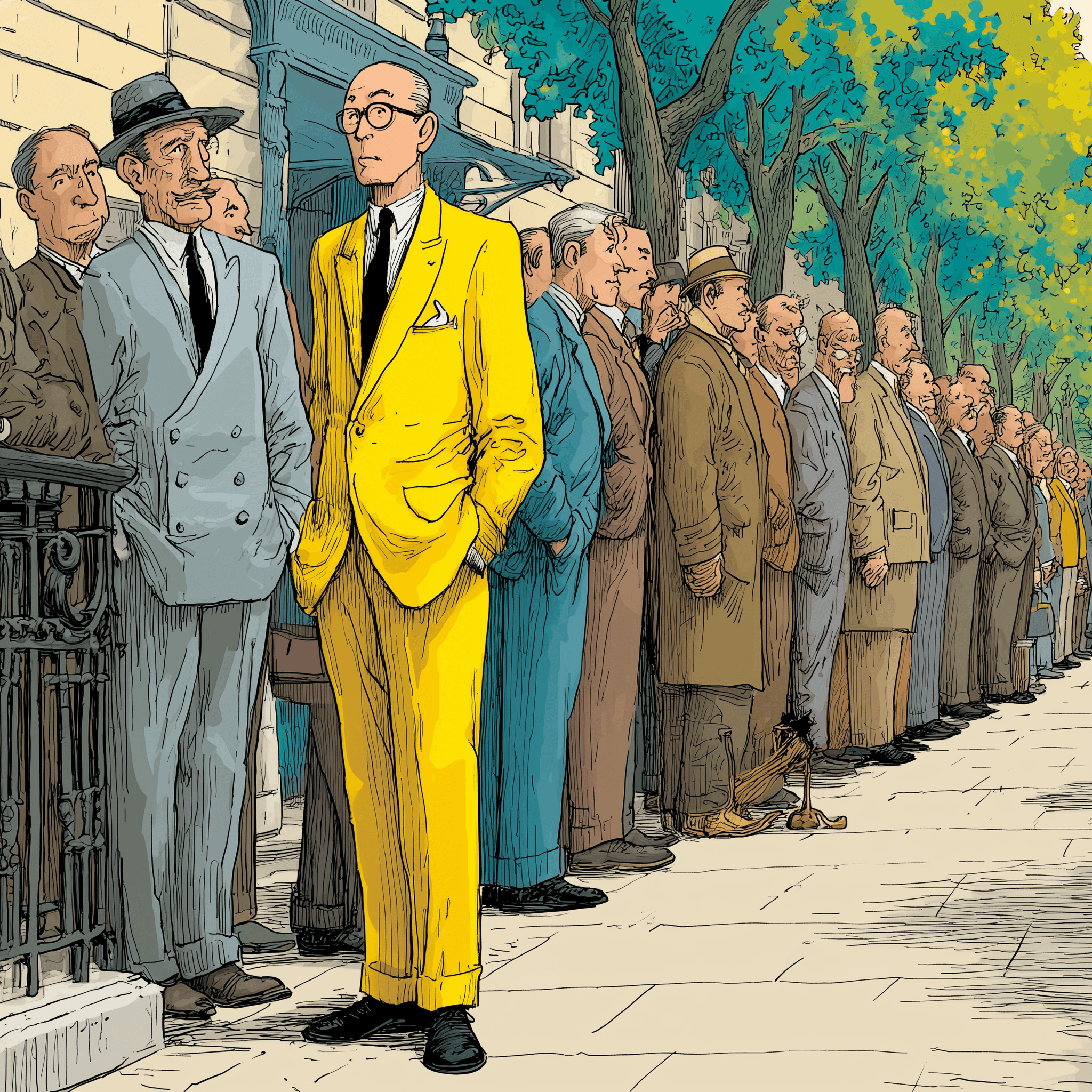
Walk through Dalston, Williamsburg, or the 11th arrondissement and the repetition is striking. Neutral shells. Technical crossbody bags. Trail runners in muted tones. Beanies that suggest altitude in sea-level neighborhoods.
Uniformity is not inherently negative. In fact, it often signals a mature aesthetic. But fashion thrives on tension between belonging and differentiation. When an aesthetic becomes default, the appetite for deviation grows.
Normcore in the early 2010s flattened fashion into irony. Streetwear in the late 2010s inflated it into spectacle. Gorpcore restored seriousness. Now seriousness itself risks monotony.
The plateau is not collapse. It is normalization.
Historical echoes: Helmut Lang and the 90s tactical moment
This is not the first time technical minimalism has captured cities.
In the late 1990s, Helmut Lang introduced a version of tactical modernism — straps, industrial fabrics, military references — that resonated with an era fascinated by utility and sleekness. The silhouettes felt prepared, even if their wearers never left the pavement.
By the mid-2000s, that aesthetic had been absorbed into broader minimalism. It no longer felt sharp. It felt standard.
The same mechanism is unfolding now. Gorpcore’s language of zips, toggles, seam taping and performance textiles has become fluent. When fluency spreads, edge dulls.
Fashion cycles are less about rejection than about recalibration.
London: performance fatigue
In London, the plateau is visible in micro-adjustments.
Creative industries that embraced Arc’teryx as intellectual armor are now softening. Vintage Carhartt jackets — worn, not pristine — are replacing laminated shells. Denim is returning, but heavier, looser, less “technical.” Footwear shifts from trail-ready to work-ready: thicker soles, reinforced toes, leather replacing mesh.
The vibe is less alpine, more industrial.
It reflects a deeper fatigue. The performance aesthetic implies perpetual readiness, perpetual optimization. There is something exhausting about dressing as though weather, terrain, and productivity are constant threats. After years of hyper-awareness, people are leaning into garments that suggest endurance rather than agility.
Workwear carries that tone.
New York: the seriousness pivot
In New York, gorpcore merged seamlessly with professional ambition. Technical shells over tailoring, Salomons under wide trousers — the look suggested that you could leave the office and hike upstate without changing.
But in 2026, a subtle pivot is underway. The new seriousness is not alpine; it is uniformed. Think heavy canvas chore coats, carpenter pants, structured overshirts. Less performance, more durability.
Carhartt WIP, long quietly embedded in urban wardrobes, is experiencing renewed visibility not as ironic streetwear but as foundational gear. Dickies silhouettes reappear, not as skate nostalgia but as neutral infrastructure.
The shift is psychological. Performancewear speaks of optimization. Workwear speaks of labor.
In a moment defined by economic recalibration and post-tech-exuberance sobriety, labor reads as grounded.
Paris: from mountain to atelier
Paris adopted gorpcore through collaboration — MM6 x Salomon, fashion houses flirting with trail footwear. The city absorbed the aesthetic into its existing vocabulary of utility chic.
Now, the pivot looks subtler.
Instead of mountain-coded gear, ateliers are exploring uniform codes: mechanic jackets, painter trousers, aprons reframed as layering pieces. Prada and Miu Miu have already flirted with uniformity — industrial tailoring, corporate silhouettes stripped of ornament. The mood is less expedition, more occupation.
Paris does not abandon aesthetics abruptly. It mutates them.
Why plateaus happen
Fashion cycles plateau for structural reasons, not emotional ones.
- Adoption curve completion. Once early adopters and aspirational followers converge, the look stabilizes.
- Commercial saturation. Retail inventory floods, collaborations multiply, exclusivity thins.
- Symbol exhaustion. What once signaled insider literacy becomes commonplace.
- Context shift. The external environment changes — economic mood, cultural anxiety, political tone — and the aesthetic feels slightly misaligned.
Gorpcore thrived in a moment obsessed with resilience and adaptability. As that anxiety normalizes, the aesthetic loses urgency.
It does not vanish. It becomes baseline.
What comes next: uniform culture
The emerging shift is not toward spectacle. It is toward structure.
Workwear and uniform culture offer a different symbolic language. They imply steadiness rather than agility. Craft rather than conquest. Repetition rather than expedition.
Vintage chore coats, faded canvas, structured overshirts, heavier denim, engineer boots — these are not dramatic departures. They are recalibrations toward groundedness.
Where gorpcore suggested escape, workwear suggests presence.
Where outdoor-luxury implied transcendence of the city, uniform culture accepts the city and fortifies against it.
The cycle never ends
Arc’teryx will not disappear from Shoreditch. Salomon will not vanish from SoHo. Technical shells will remain useful — and stylish — for years.
But the aesthetic peak has passed. The look has stabilized into norm.
And fashion does not thrive on norm.
The next shift is already visible in the texture of garments — heavier, less laminated, more worn-in. The mountain has served its symbolic purpose. The workshop, the factory, the uniform locker room now feel fresher.
Gorpcore conquered the city.
Now the city wants something less prepared — and more permanent.