The £22 Smash Burger Problem
How Instagram turned simple food into luxury theatre
London / Grub
From £22 smash burgers to £8.50 chocolate strawberries at Borough Market, simple food is becoming algorithmic spectacle. When did lunch turn into performance?
// src/content/articles/global/the-22-pound-smash-burger-problem.mdx
From £22 smash burgers to £8.50 chocolate strawberries at Borough Market, simple food is becoming algorithmic spectacle. When did lunch turn into performance?
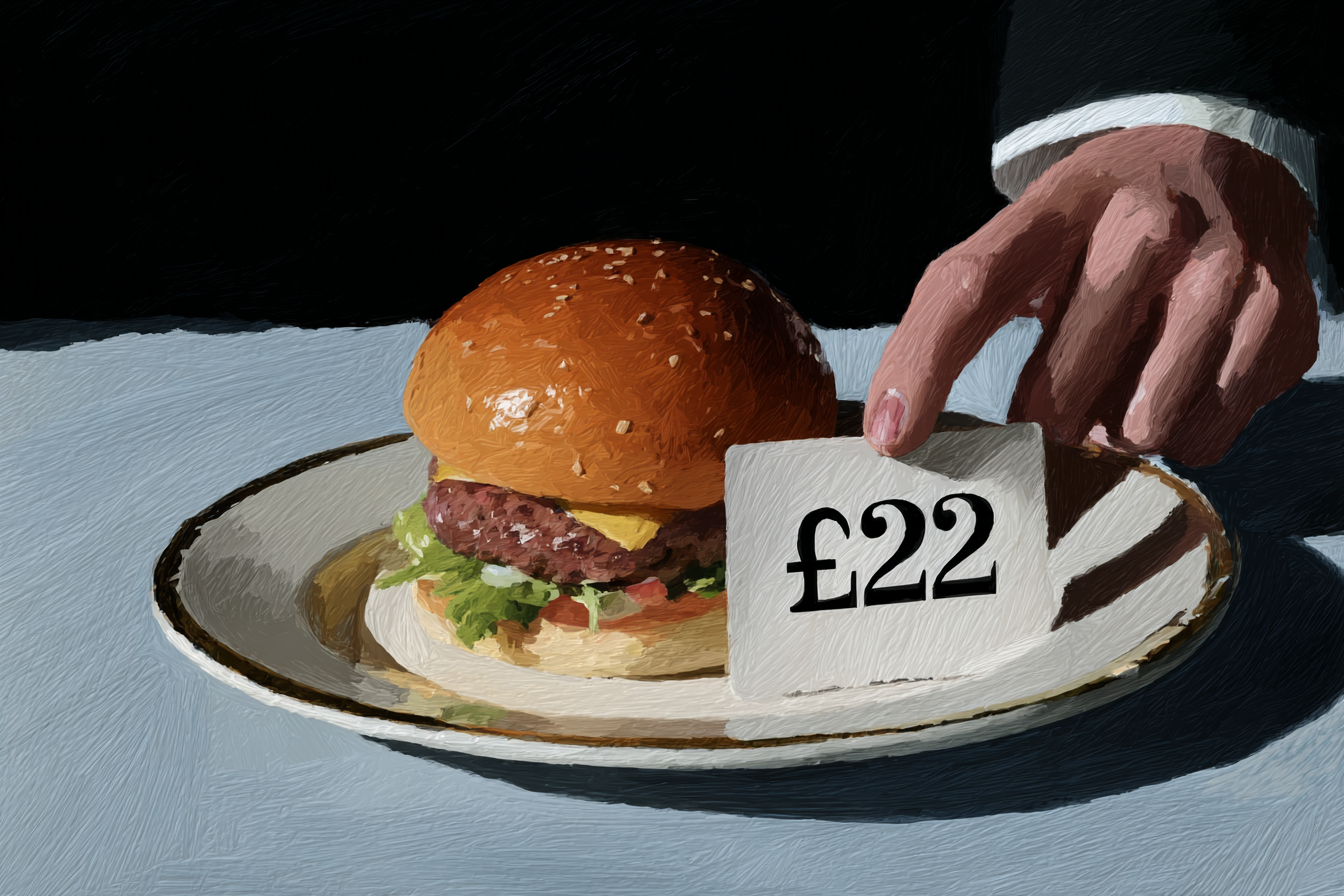
The burger that forgot what it was
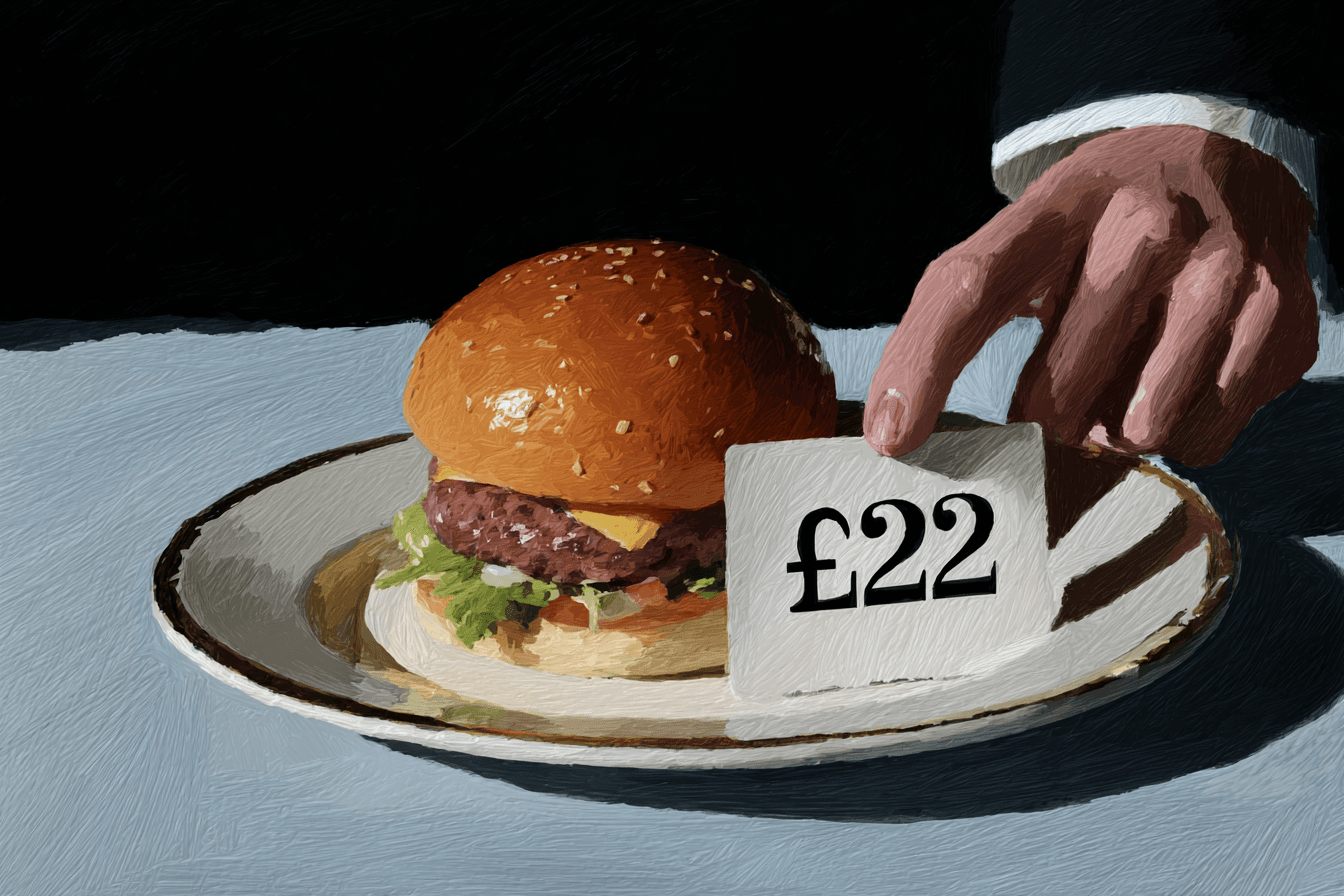
A smash burger was never meant to be clever. It was a technique, not a philosophy. A ball of beef pressed hard onto a hot grill so the edges frill and caramelise, served in a soft bun with cheese melting into the cracks. It was quick, direct and, most importantly, affordable. The point was that anyone could have one without ceremony.
Which is why the £22 version feels faintly surreal.
Walk through parts of London now and you will find smash burgers presented as events. Butcher paper stamped with logos. Neon-lit interiors designed for the grid. Limited drops. Queues documented as if they are part of the tasting menu. The burger itself often arrives immaculate, glossy, engineered for the camera before the appetite.
The smash burger did not change. The environment around it did.
The algorithm and the grill
The return of the smash burger over the past decade coincided with the rise of short-form video and food-focused social media. Certain foods simply perform better on screen. A smashed patty crisping under pressure. Cheese stretching in slow motion. Steam rising in high contrast. The format is cinematic in miniature.
Restaurants quickly learned that if a dish travels well online, it acquires a second life beyond the dining room. A single viral post can generate a weekend of foot traffic. Scarcity follows. So does price elasticity.
In this context, a £22 burger is not simply a calculation of ingredients and rent. It is a positioning decision. A premium number signals craft, exclusivity and desirability. It suggests you are not eating fast food but participating in something curated. The price becomes part of the narrative.
And narratives are expensive to maintain.
What £22 actually covers
It is easy to reduce the conversation to outrage. But London is not a cheap city to feed.
Energy costs surged sharply after 2021. Business rates remain substantial. The National Living Wage has increased again, as it should. Commercial rents in central zones are among the highest in Europe. Add VAT at 20 percent and the commission taken by delivery platforms, which can climb to 30 percent or more, and margins narrow quickly.
Beef itself has not stood still. Wholesale UK beef prices rose significantly between 2022 and 2024 due to feed costs and supply pressures. Restaurants that emphasise British, grass-fed sourcing will pay more still. By the time labour, overheads and tax are layered in, the raw ingredient cost is only a fraction of the total.
On paper, the number begins to look less theatrical.
But paper does not account for perception.
The Borough Market moment
In early 2024, a cup of chocolate-covered strawberries at Borough Market went viral. Seven strawberries dipped in melted chocolate, priced at £8.50. The reaction online was predictable: half amusement, half fury. Videos of the queue racked up millions of views. The strawberries themselves were unremarkable. The spectacle was not.
People were not paying for fruit. They were paying to participate in something visible.
The same logic animates the £22 smash burger. The queue becomes part of the product. The price becomes proof that the experience is desirable. Social media does not reward modesty. It rewards contrast. Excess photographs well.
In that environment, food drifts toward theatre.
When rebellion becomes branding
The original appeal of the smash burger lay in its refusal of fuss. It was an answer to the towering, knife-through-the-centre gourmet burger. No architecture. No performance. Just heat and fat and salt.
Now the anti-gourmet burger has been absorbed into the gourmet system. Truffle additions, branded collaborations, limited-edition sauces and carefully sourced buns transform something simple into something curated. The irony is difficult to miss. A dish designed to cut through pretension has been rebranded as an object of aspiration.
The transformation is not accidental. It reflects a broader shift in hospitality. Restaurants no longer compete only on flavour. They compete on image density. The interior must look right. The lighting must flatter. The packaging must signal care. All of this costs money, and that cost inevitably migrates to the plate.
The burger is no longer just food. It is content infrastructure.
The fatigue setting in
Yet there are signs of strain. The backlash to high-priced “simple” food is not merely about inflation. It is about expectation. A smash burger carries cultural baggage. It promises accessibility. When that promise is replaced by spectacle, something feels misaligned.
Diners are beginning to question whether every meal needs to be documented. Whether every queue is worth the choreography. Whether paying for the feed is the same as paying for flavour.
The £22 smash burger is not a moral failure. It is a symptom. It reflects a city where attention is scarce and therefore monetised aggressively. It reflects an industry navigating real cost pressures while also competing in a hyper-visual economy. It reflects customers who want both authenticity and performance, often simultaneously.
The danger is not that burgers become expensive. It is that food forgets its scale.
A smash burger was powerful because it was immediate. Because it felt democratic. Because it required no explanation. When lunch begins to resemble a product launch, something subtle is lost.
There will always be demand for spectacle. But there is also, quietly, a growing appetite for restraint. For places that are less choreographed. For food that does not need to be framed to be valued.
If the smash burger is to remain culturally interesting, it may need to remember that its strength was never in the branding.
It was in the heat of the grill.